
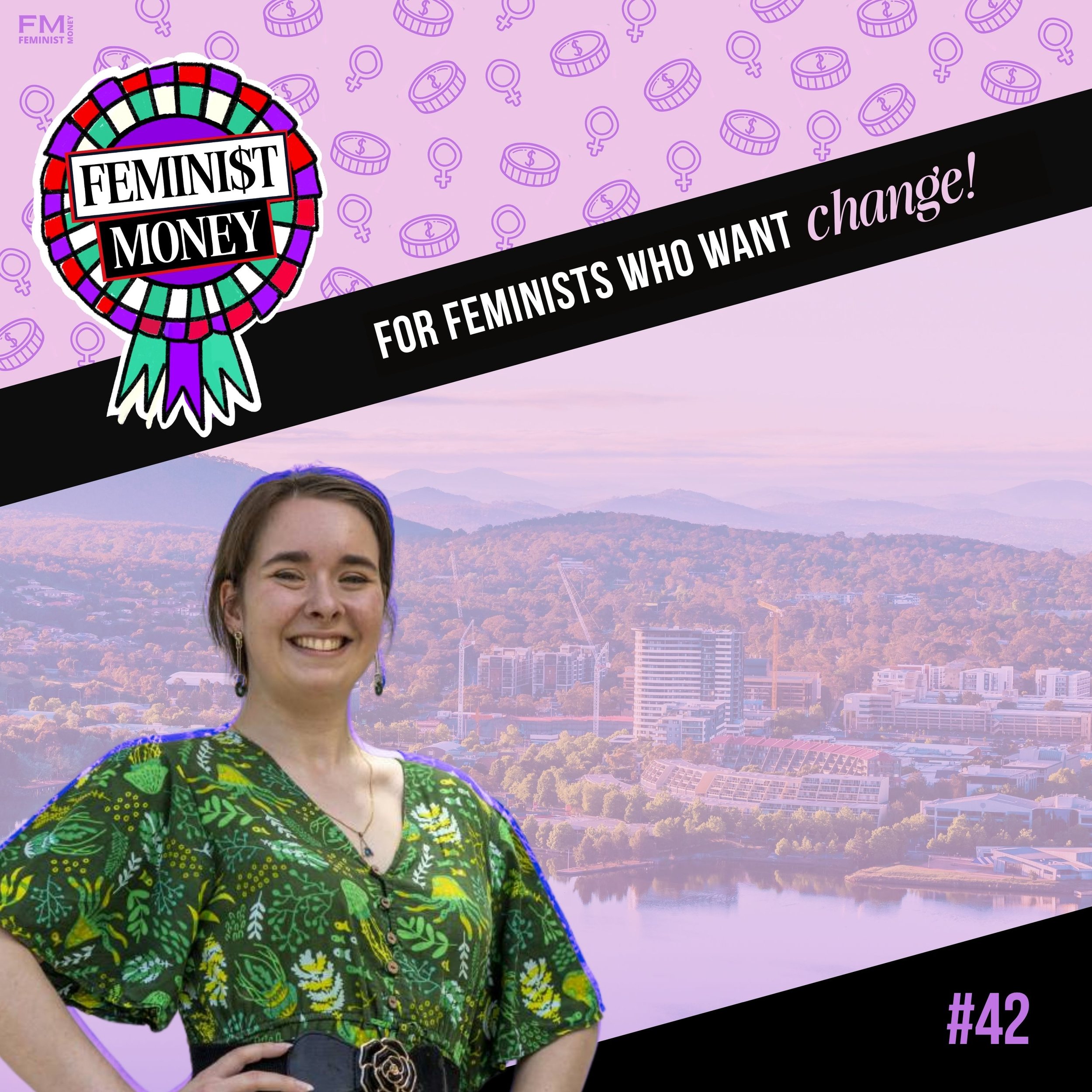
Episode 42
International Women’s Day 2026: Young Women, Power and Representation | Laura Nuttall, ACT Greens MLA
Join us for Episode 42 of Feminist Money as we discuss:
1. Part 1: Becoming the first Gen Z politician in the ACT Legislative Assembly.
2. Part 2: Gender equality gaps and women’s financial reality in Canberra.
3. Part 3: Financial pressures facing young women and how to improve economic security.
Episode guest: Laura Nuttall is the first Gen Z member of the ACT Legislative Assembly and serves as the Greens Spokesperson for Women, Young People and Disability. She advocates for environmental and economic justice and greater participation of young people in Canberra politics.
episode description
episode show notes
(1.58) Breaking barriers in ACT politics as a Gen Z politician redefining leadership
Introducing Laura Nuttall MLA
As the first Gen Z MLA in the ACT, you represent a new generation of young voters in Canberra. What does this milestone mean to you personally, and what message do you hope it sends to young women interested in politics and leadership?
Becoming a young leader within the Greens sets you apart in Australia’s political landscape. What is one key leadership lesson you’ve learned so far, and what advice would you give to other young people entering politics?
(8.08) Gender equality gaps and women’s financial reality
This International Women’s Day, UN Women Australia is encouraging action to “Balance the Scales” for fair and inclusive justice. In your view, where are women in Canberra and across Australia still experiencing inequality or disadvantage?
The ACT often ranks highly for gender equality in Australia. From your perspective, how do these statistics compare to the everyday financial realities faced by women?
(13.11) Financial pressures facing young women and how to improve economic security
As the Greens spokesperson for Women and Young People, what are the most common financial pressures you hear from young women, including students, early career workers, and young mothers?
If you could prioritise one practical change to improve women’s long-term economic security, what would it be and why?
What is one practical piece of feminist advice women can follow to advance gender equality this International Women’s Day?